Best Time to Visit South Korea for Lower Prices
12 August, 2026 - 1 min read - By Telzen
The cheapest time to visit South Korea is during winter (November to February), when flight and hotel prices drop significantly compared to peak summer months. Shoulder seasons like spring (March to May) and autumn (September to October) offer a balance of good weather and moderate prices, making them ideal for budget-conscious travelers.
South Korea has become one of Asia's most exciting travel destinations. From the electric streets of Seoul to the coastal beauty of Busan and the quiet charm of Gyeongju, the country draws millions of visitors every year. K-pop tourism, Korean cuisine, ancient temples, and world-class shopping have all contributed to a sharp rise in international arrivals.
But here's what many travelers overlook: when you visit matters just as much as where you go. Flight prices, hotel rates, and even restaurant crowds can vary dramatically depending on the season. A trip to Seoul in July can cost nearly double what the same trip costs in January. Understanding these seasonal shifts can save you hundreds of dollars without sacrificing the quality of your experience.
This guide breaks down South Korea's travel seasons, identifies the cheapest months to visit, and provides practical money-saving tips for every time of year. Whether you're planning a solo adventure or a family holiday, knowing when to book can make all the difference.
Understanding South Korea's Travel Seasons
What Makes Peak Season So Expensive?
South Korea's peak travel season runs from June through August, driven by summer school holidays and warm weather. During this period, flights from major international hubs fill up fast and hotel prices in Seoul and Busan climb sharply. The country also experiences its rainy season (known as "jangma") from late June to mid-July, which adds humidity and heavy rainfall to an already crowded and expensive travel period.
Public holidays and major festivals also create price spikes. Chuseok (Korean Thanksgiving) and Seollal (Lunar New Year) are particularly significant. During these periods, domestic travel surges, trains sell out weeks in advance, and accommodation prices in popular regions increase considerably.
What Are Shoulder Seasons and Why Do They Offer Better Value?
Shoulder seasons in South Korea fall in spring (March to May) and autumn (September to October). These are widely considered the most pleasant times to visit from a weather perspective. Spring brings cherry blossoms and mild temperatures, while autumn delivers stunning foliage and clear skies.
Prices during shoulder seasons are moderate. Flights and hotels cost more than in winter but less than during the summer peak. Crowds are present, especially at popular spots like Gyeongju and Nami Island, but they are more manageable than in peak summer.
What Does Off-Season Travel Look Like in South Korea?
The off-season covers November through February, with the coldest months being December and January. Temperatures in Seoul can drop below -10°C (14°F), and snowfall is common. This deters many tourists, which is exactly why prices fall. Airlines and hotels compete for a smaller pool of travelers, resulting in some of the lowest rates of the year.
The Cheapest Times to Visit South Korea
Why Are November to February the Most Budget-Friendly Months?
Winter is consistently the cheapest period to visit South Korea. International flight prices drop noticeably from November onward, and budget accommodation in Seoul can be found for significantly less than during summer. According to travel price comparison data from platforms like Skyscanner and Google Flights, January tends to offer the lowest average airfare to Incheon International Airport from most major markets.
The table below shows approximate average costs during each season to help you plan your budget.
| Season | Months | Average Daily Budget (USD) | Crowd Level |
| Peak (Summer) | June to August | $100 to $150+ | Very High |
| Shoulder (Spring) | March to May | $70 to $100 | High |
| Shoulder (Autumn) | September to October | $65 to $95 | Moderate to High |
| Off-Season (Winter) | November to February | $45 to $75 | Low |
What Is the Weather Like During Budget Travel Months?
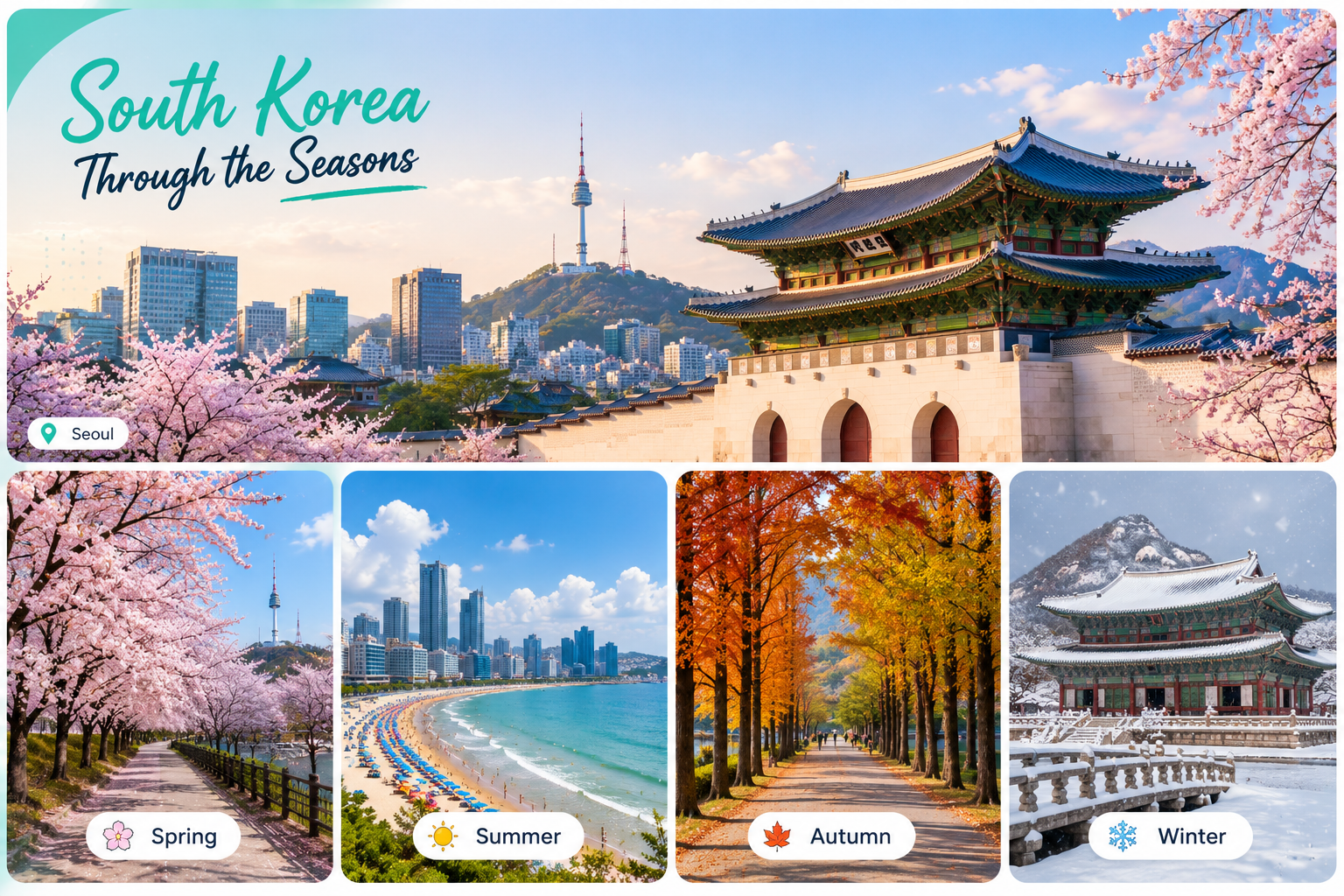
Winter in South Korea is cold and dry. Seoul averages around 0°C (32°F) in January. While this may sound uninviting, it comes with some real advantages. The air is crisp and clear, making it ideal for sightseeing without the heat and humidity of summer. Cities feel less congested, queues at popular attractions are shorter, and locals are generally more relaxed.
South Korea also embraces winter tourism. Ski resorts like Yongpyong and High1 attract local visitors, which creates a lively atmosphere in mountain regions even during the coldest months.
November and early December offer a sweet spot: temperatures are cool but not yet bitter, autumn foliage is still visible in some regions, and prices have already started dropping from their summer highs.
Money-Saving Tips for Each Season
How to Book Flights and Accommodation Strategically
Booking flights at least 6 to 8 weeks in advance tends to yield the best prices for most international routes to South Korea. For winter travel, booking even earlier (3 to 4 months out) can lock in lower fares before year-end holiday demand pushes prices back up in December.
For accommodation, consider guesthouses, hostels, or "goshiwons" (budget micro-rooms popular with young travelers) in urban areas. Booking through platforms like Agoda or Booking.com and filtering by guest ratings can help you find value options that don't compromise on cleanliness or location.
How Can Local Holidays and Events Help You Save Money?
Counterintuitively, traveling around (not during) major Korean holidays can work in your favor. In the days immediately before and after Chuseok or Seollal, many Koreans travel to their hometowns, leaving cities like Seoul quieter than usual. Restaurants and shops may be closed on the holiday itself, but prices for accommodation often dip.
Local food festivals and regional cultural events are also worth exploring. Many of these are free or low-cost and offer a far more authentic experience than commercialized tourist attractions.
What Seasonal Attractions Are Less Crowded and Cheaper?
Winter opens up a set of experiences that are genuinely more enjoyable with fewer crowds. Gyeongbokgung Palace in Seoul, for example, is stunning under a light dusting of snow and far less packed than during cherry blossom season. The Haeinsa Temple in the Gayasan mountains is similarly atmospheric in winter and costs nothing to visit.
Ski resorts are the one exception where winter does attract crowds and higher prices, particularly on weekends. If skiing is on your agenda, aim for weekday visits to save on lift passes and rental fees.
Regional Price Variations
How Do Costs Differ Between Seoul, Busan, and Smaller Cities?
Location plays a significant role in your overall travel budget. Seoul, as the capital and most visited city, tends to be the most expensive. Busan, the second-largest city, offers a slightly more affordable alternative with a vibrant food scene, beautiful beaches, and excellent public transport.
The table below compares average daily accommodation costs in key regions during off-season.
| City/Region | Average Accommodation Cost Per Night (USD) | Relative Cost |
| Seoul (Myeongdong/Gangnam) | $40 to $80 | Highest |
| Busan | $30 to $60 | Moderate |
| Gyeongju | $25 to $45 | Lower |
| Jeonju | $20 to $40 | Budget-Friendly |
| Sokcho | $25 to $50 | Moderate |
What Are Some Budget-Friendly Regions Outside Major Cities?
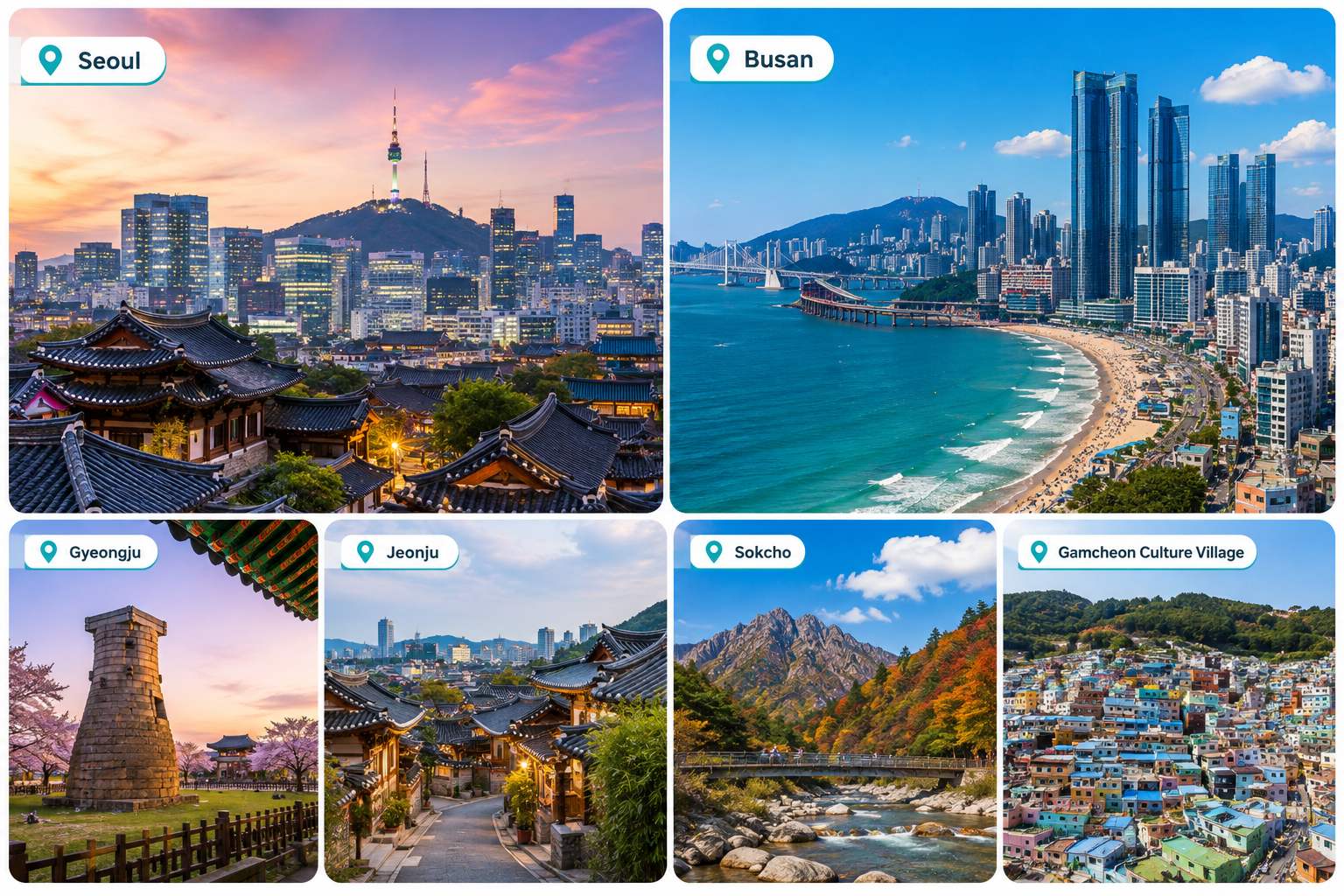
Jeonju, located in the North Jeolla province, is one of South Korea's most underrated destinations. Known for its well-preserved Hanok village (traditional Korean houses), bibimbap, and local arts scene, Jeonju attracts far fewer international tourists than Seoul or Busan. Prices for food and accommodation are noticeably lower.
Sokcho, near the Seoraksan National Park, is another hidden gem. The park itself charges a small entrance fee and offers spectacular mountain scenery, coastal views, and hiking trails. Sokcho's seafood markets are affordable and excellent.
Gyeongju, often called "the museum without walls," is a UNESCO World Heritage-rich city with ancient burial mounds, temples, and royal tombs. It sees less international tourist traffic than Seoul, keeping prices relatively low throughout the year.
Planning Your Budget South Korea Trip
What Are the Average Daily Costs During Different Seasons?
Your daily spend in South Korea depends on your travel style and the season. A budget backpacker staying in a hostel, eating at convenience stores and local restaurants, and using public transport can comfortably get by on $45 to $60 per day during winter. A mid-range traveler staying in a clean guesthouse or budget hotel and dining at sit-down restaurants might spend $75 to $100 per day.
What Are the Best Accommodation Options at Various Price Points?
South Korea offers a wide range of accommodation to suit every budget.
| Accommodation Type | Average Cost Per Night (USD) | Best For |
| Hostel (dorm bed) | $15 to $25 | Solo budget travelers |
| Guesthouse (private room) | $30 to $55 | Budget travelers wanting privacy |
| Budget hotel (2-3 star) | $50 to $80 | Couples and families |
| Hanok guesthouse | $40 to $90 | Cultural experience seekers |
| Mid-range hotel (4 star) | $90 to $150 | Comfort-focused travelers |
Hanok guesthouses, found in neighborhoods like Bukchon in Seoul or the Hanok Village in Jeonju, are a particularly memorable option. They are affordable relative to their cultural value and often include a traditional Korean breakfast.
How Can You Keep Transportation and Dining Costs Low?
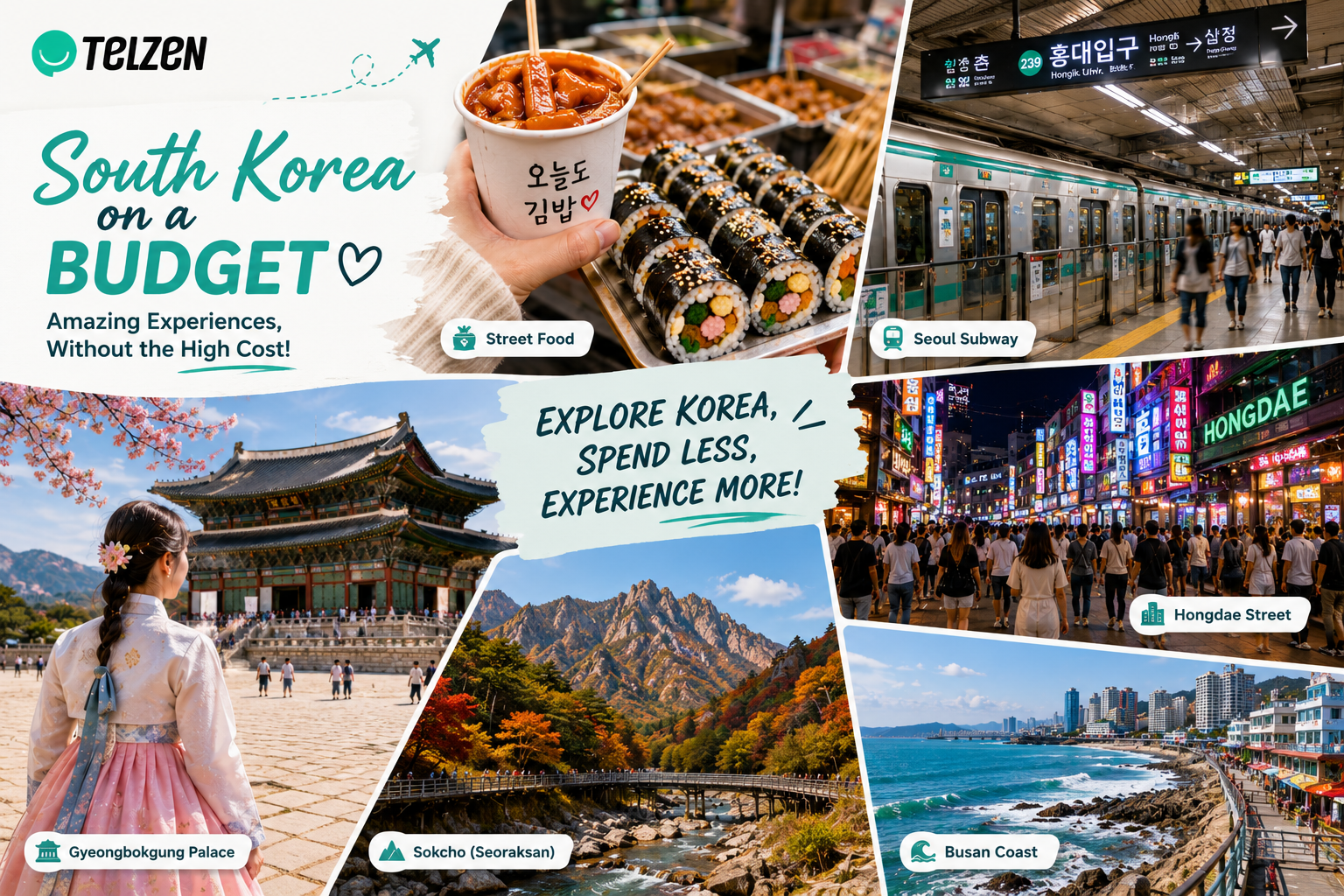
South Korea's public transport system is one of the best in the world. The T-money card (a rechargeable transit card) covers metro, buses, and some taxis across most cities and significantly reduces per-trip costs compared to buying individual tickets.
For intercity travel, KTX (Korea Train Express) is fast and comfortable, but slower trains like the Mugunghwa or Saemaeul can cut costs in half on the same routes.
Food costs can be kept very low by eating at "bunsik" restaurants (Korean fast-food diners), "gimbap" shops, or convenience stores like CU and GS25. A full meal at a local restaurant typically costs $5 to $8. Street food in markets like Gwangjang in Seoul or Gukje in Busan is flavorful and extremely affordable.
What Free and Low-Cost Attractions Are Worth Visiting?
South Korea is rich with free and low-cost experiences. Key highlights include:
- Gyeongbokgung Palace (small entry fee, free in traditional hanbok attire)
- Bukchon Hanok Village (free to walk)
- Namsan Park and N Seoul Tower (free park, tower entry is optional)
- Seoraksan National Park (small entrance fee)
- Insadong and Hongdae street markets (free to browse)
- Bongeunsa Temple, Seoul (free entry)
- Gamcheon Culture Village, Busan (small fee)
Most national parks, temple grounds, and city neighborhoods can be explored for minimal cost, making South Korea a genuinely rewarding destination for budget travelers.
Stay Connected Without Overspending: Consider a Telzen eSIM
Before you land in South Korea, sorting out your mobile data is essential. Roaming charges from your home carrier can add up fast, and buying a SIM at the airport is often overpriced.
Telzen eSIM is a smart and affordable alternative. Plans start from as little as $1.00, making it one of the most cost-effective data options available for South Korea. Telzen offers solid data coverage, competitive rates, and regular discounts, including a special deal on your first purchase. Because Telzen is an eSIM, there is no physical card to buy. You simply scan a QR code before departure and you're ready to go the moment you land. For budget travelers who want reliable connectivity without the cost, Telzen is well worth considering.
Make the Most of South Korea on Any Budget
South Korea rewards travelers who plan ahead. The clearest takeaway is this: visit between November and February for the lowest prices on flights and accommodation, and you'll find a version of the country that most tourists never see. Quieter streets, no queues at major landmarks, and winter markets with steaming hot street food all add up to an experience that's genuinely rich despite the savings.
If you prefer milder weather and can stretch the budget a little, early spring (late March to April) and late autumn (September to October) offer strong value alongside South Korea's most photogenic seasonal scenery.
Whatever your travel priorities, the key is to book early, travel light, and lean into the local food and transport options. South Korea makes it easy to explore deeply without spending heavily. The planning is the hardest part. Everything else tends to take care of itself.
Frequently Asked Questions
What is the cheapest month to visit South Korea?
January is typically the cheapest month to visit South Korea. Flight prices and hotel rates are at their lowest due to cold weather and reduced tourist demand. Travelers can find accommodation deals and discounted flights that are significantly lower than peak summer rates.
Is South Korea expensive to travel on a budget?
South Korea is very manageable on a budget. A daily spend of $45 to $60 covers hostel accommodation, local meals, and public transport during the off-season. Costs rise in summer and during major public holidays.
When should I avoid visiting South Korea to keep costs down?
Avoid visiting during July and August, as well as during Chuseok (Korean Thanksgiving) and Seollal (Lunar New Year). These are the most expensive periods for flights and accommodation.
Is spring or winter better value for money in South Korea?
Winter offers lower prices overall, but spring provides better weather and the famous cherry blossom season. Spring in South Korea is busier and costs more than winter, but it is still more affordable than peak summer travel.
What is the best region to visit in South Korea for budget travelers?
Jeonju and Gyeongju are among the most budget-friendly regions. Both offer rich cultural experiences, affordable food, and lower accommodation costs compared to Seoul or Busan.
Do I need travel insurance for South Korea?
Travel insurance is strongly recommended for any international trip. South Korea's healthcare is excellent but can be costly for foreign visitors without coverage.
